

Medically reviewed by Dr Himanshu | Consultant Dermatologist at Formulo
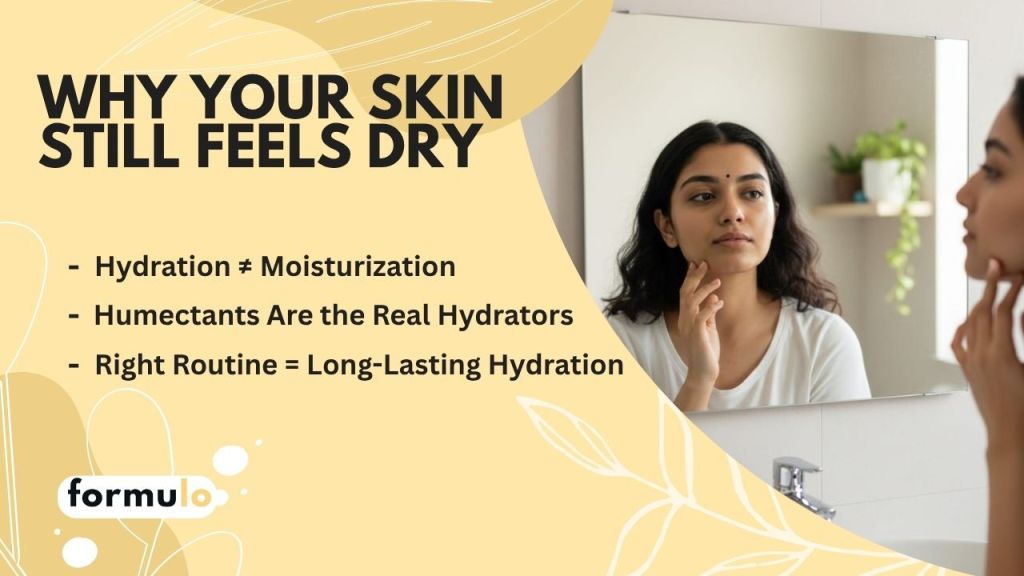
If you’ve been relying solely on moisturizers for skin hydration, you might be missing half the equation. True skin hydration involves more than just slathering on a heavy cream—it’s a science-backed process that requires understanding how your skin actually absorbs and retains water.
The Difference Between Hydration and Moisturization
Contrary to popular belief, hydration and moisturization aren’t the same thing. Hydration refers to water content within your skin cells, while moisturization creates a protective barrier to prevent water loss. Think of it this way: hydration is about adding water to your skin, while moisturization is about keeping it there.
Research shows that water hydrates your dermis (the deepest layer of your skin) but doesn’t effectively reach your epidermis (the top layer) through drinking alone. This is why topical hydration strategies are essential for healthy, plump skin.
What Really Hydrates Dehydrated Skin
1. Humectant Ingredients
The most effective skin hydration comes from humectant ingredients that attract water molecules:
- Hyaluronic acid: This powerhouse can hold up to 1,000 times its weight in water, making it the gold standard for skin hydration
- Glycerin: Draws moisture from the air and deeper skin layers to hydrate the surface
- Ceramides: Restore the skin barrier while maintaining optimal hydration levels
2. The Right Application Method
Dermatologists recommend applying hydrating serums on damp skin. This technique allows ingredients like hyaluronic acid to lock in that extra moisture, increasing hydration effectiveness by up to 60%.
3. Water-Based Formulations
Lightweight, water-based serums penetrate deeper than heavy creams, delivering hydration where dehydrated skin needs it most. Look for products with 5-10% niacinamide, which improves skin hydration while reducing water loss.
Common Hydration Mistakes to Avoid
- Using only moisturizer on dry skin : Without proper hydration underneath, you’re just sealing in dryness
- Over-cleansing : Harsh cleansers strip natural oils, leading to dehydrated skin even in oily skin types
- Ignoring humidity levels : Indoor heating and air conditioning can decrease skin hydration by up to 25%
The Surprising Truth About Oily Skin and Hydration
Research reveals that oily skin types often have lower hydration levels than dry, normal, or combination skin. This paradox occurs because excess oil production can be a sign of dehydrated skin trying to compensate for lack of water content.
Building Your Optimal Hydration Routine
For effective skin hydration, layer your products strategically:
1. Start with a gentle, hydrating cleanser
2. Apply a hyaluronic acid serum to damp skin
3. Follow with a niacinamide treatment for enhanced hydration
4. Seal with a lightweight moisturizer
5. Always finish with SPF during the day
Results typically appear within 2-4 weeks, with optimal skin hydration achieved after 8-12 weeks of consistent use.
How Formulo Makes Hydration Work For You
At Formulo, we don’t believe in trial-and-error skincare. Every skin treatment kit we recommend is backed by dermatologists and designed for your exact skin needs—including your unique hydration requirements.
Start by taking a simple Skin Quiz to help our dermatologists understand whether you have dehydrated skin, oily skin with hidden dehydration, or other specific concerns. We’ll then create a prescription-grade kit featuring the right concentration of hyaluronic acid, ceramides, and other hydrating ingredients tailored to your skin type.
No more guessing which products will actually hydrate your skin. Get science-backed solutions delivered right to your doorstep.

 Formulo Blogs
Leave a comment