

Medically reviewed by Dr Himanshu | Consultant Dermatologist at Formulo
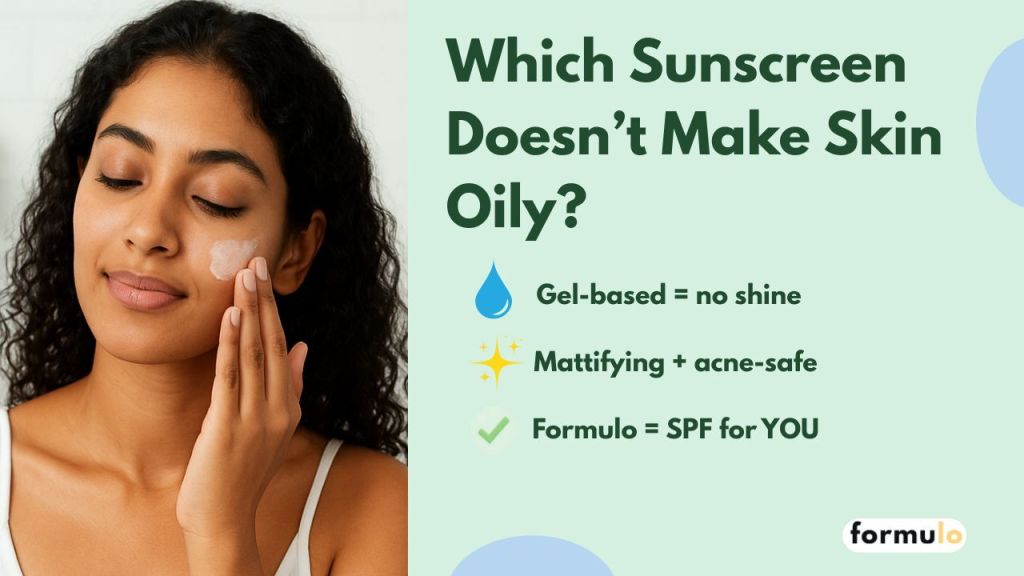
If you have oily skin, you’ve likely experienced the frustration of applying sunscreen only to feel like you’re wearing a greasy mask by midday. The good news? Modern formulations have evolved significantly, and finding a sunscreen that doesn’t make skin oily is entirely possible when you know what to look for.
Understanding Why Some Sunscreens Feel Greasy
Traditional sunscreens often contain heavy emollients and oils that create a protective barrier on the skin. While effective for sun protection, these ingredients can feel suffocating on oily skin types, leading to increased shine, clogged pores, and even acne breakouts.
The key difference lies in the formulation. Cream-based sunscreens typically contain 15-20% oil content, while gel-based sunscreens contain less than 5%, making them ideal for oily skin.
What Makes a Sunscreen Non-Greasy?
Key Ingredients to Look For:
- Gel-Based Formulations
Gel sunscreens absorb quickly into the skin without leaving residue. They typically contain water as the primary base, making them lightweight and perfect for oily skin types. - Mattifying Agents
Ingredients like silica and kaolin clay help absorb excess oil throughout the day, keeping your skin shine-free for 6-8 hours. - Non-Comedogenic Labels
These products are specifically tested to ensure they won’t clog pores – crucial for preventing acne in oily skin types.
The Best Non-Greasy Sunscreen Features
Texture and Finish
The ideal sunscreen for oily skin should have:
- Water-like or gel consistency
- Quick absorption (under 60 seconds)
- Matte or semi-matte finish
- No white cast or residue
SPF Protection Level
Dermatologists recommend minimum SPF 30 for daily use, with SPF 50+ providing optimal protection. Look for broad-spectrum coverage that protects against both UVA and UVB rays.
Application Tips for Oily Skin
- Less is More
Apply a thin, even layer – about 1/4 teaspoon for the face. Over-application can lead to greasiness regardless of formulation. - Layer Correctly
Apply gel sunscreen as the final step in your skincare routine, after lightweight serums but before makeup. - Reapplication Strategy
For oily skin, use blotting papers before reapplying sunscreen every 3 hours to remove excess oil without disturbing protection.
Common Mistakes to Avoid
- Skipping sunscreen due to fear of greasiness – this increases hyperpigmentation risk by 40%
- Using alcohol-heavy formulas that initially feel dry but trigger rebound oil production
- Mixing incompatible products heavy moisturizers under lightweight sunscreen can cause pilling
The Science Behind Oil Control
Studies show that gel-based sunscreens with niacinamide can reduce sebum production by up to 23% over 4 weeks of regular use. This means your sunscreen can actually help control oil while protecting your skin.
How Formulo Makes Sun Protection Work For You
At Formulo, we understand that finding the right sunscreen is crucial for maintaining healthy skin. Every recommendation in our personalized treatment kits considers your specific skin type and concerns.
Our dermatologists analyze your unique skin profile through a simple Skin Quiz to create a prescription-grade skincare routine that includes the perfect SPF for your needs – whether that’s a lightweight gel sunscreen for oily skin or a more nourishing formula for dry skin types.
No more guessing games or greasy disappointments. Get science-backed sun protection that actually works for your skin.

 Formulo Blogs
Leave a comment